

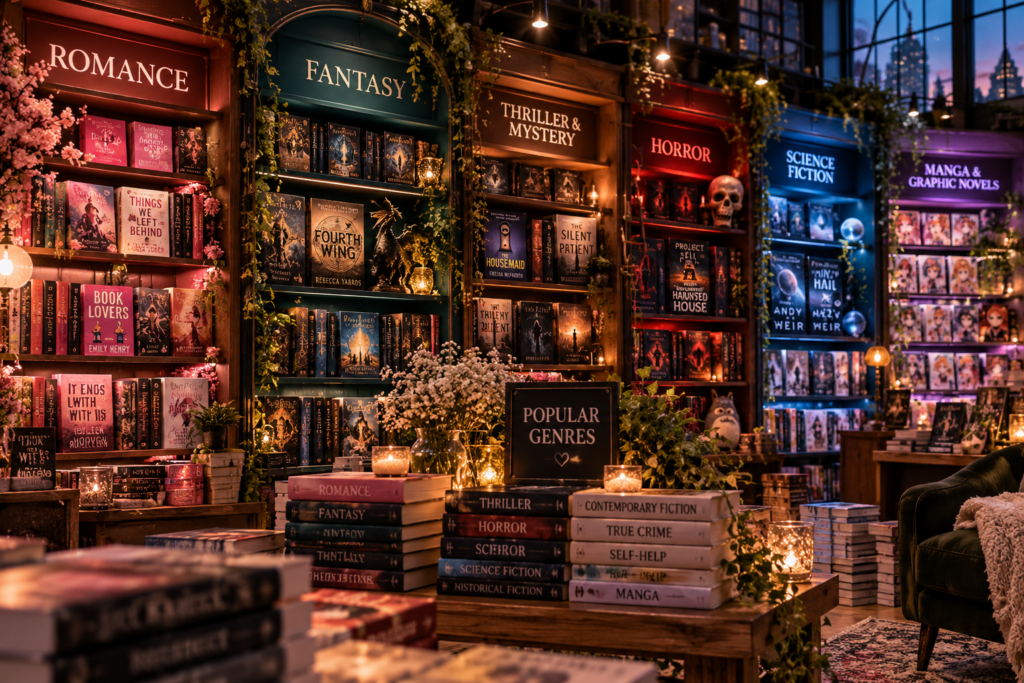
What are people actually reading in 2026? Scroll through BookTok, browse a bookstore, or explore bestseller lists, and you’ll quickly notice that certain genres appear again and again. Romance, fantasy, psychological thrillers, and graphic novels are all attracting attention from readers.
But popularity isn’t always the same as growth. Some genres have enormous established audiences, while others are becoming more visible through social media, film adaptations, and changing reading habits.
Let’s explore the most popular book genres in 2026, what makes them appealing, and which ones might deserve a place on your reading list.
What Are the Most Popular Book Genres in 2026?
There isn’t one universal ranking of book genres because popularity varies by country, age group, and format. Print sales, audiobook downloads, and online recommendations can tell very different stories.
However, several genres consistently stand out in bookstores and reading communities. Romance, fantasy, mystery, thrillers, and contemporary fiction have broad audiences, while horror, manga, and graphic novels are attracting considerable interest.
Nonfiction also remains an important part of the market, particularly books about personal development, history, and real-life experiences. Together, these categories show just how diverse modern reading has become.
1. Romance: Stories That Make Readers Feel Everything
Romance continues to attract readers who enjoy emotional connections, memorable characters, and relationships that develop throughout a story. From lighthearted romantic comedies to deeply emotional love stories, the genre offers something for almost every mood.
One of its greatest strengths is variety. Contemporary romance, historical romance, LGBTQ+ romance, and romantic suspense all provide different experiences while keeping relationships at the center.
Authors such as Emily Henry and Ali Hazelwood have helped bring contemporary romance to wider audiences. Meanwhile, BookTok has made romantic tropes like enemies to lovers and fake dating recognizable even to casual readers.
For many people, romance provides comfort, excitement, and emotional satisfaction. It’s a genre readers can return to whenever they want a story that makes them feel connected to its characters.
2. Fantasy and Romantasy: Escaping Into Magical Worlds
Fantasy transports readers into worlds filled with magic, mythical creatures, dangerous adventures, and extraordinary possibilities. It offers an escape from everyday life while exploring familiar themes such as friendship, courage, loyalty, and power.
Romantasy, which combines romance and fantasy, has become especially visible in online reading communities. Books by Sarah J. Maas and Rebecca Yarros are frequently discussed for their magical settings, dramatic relationships, and immersive storytelling.
Many fantasy novels also belong to longer series, allowing readers to spend more time with their favorite characters. This encourages enthusiastic fan communities, theories, and discussions about what might happen next.
For anyone who loves detailed world-building and unforgettable adventures, fantasy remains one of the most exciting genres to explore.
3. Psychological Thrillers and Mystery: The Love of Suspense
Few things are as satisfying as a mystery that keeps you guessing until the final pages. Psychological thrillers are particularly appealing because they combine suspense with complicated characters, hidden motivations, and unexpected revelations.
While traditional mysteries often focus on solving a crime, psychological thrillers explore the darker sides of human behavior. Unreliable narrators, family secrets, and surprising plot twists are common features.
Authors such as Freida McFadden and Lisa Jewell have attracted readers who enjoy fast-paced, suspenseful stories. Their books often use short chapters and unanswered questions to encourage readers to keep going.
Sometimes the most irresistible book isn’t the one with the happiest ending. It’s the one that makes you need to know what happens next.
Thrillers are especially popular among readers looking to escape a reading slump. When every chapter introduces another mystery, putting the book down can become surprisingly difficult.
4. Horror: More Than Just Scary Stories
Horror is attracting readers who enjoy unsettling atmospheres, disturbing mysteries, and stories that explore our deepest fears. Although supernatural creatures remain popular, modern horror can be much more psychologically complex.
Some novels focus on isolation, grief, identity, or social anxieties rather than traditional monsters. Others combine horror with fantasy, science fiction, or literary fiction to create something unexpected.
Authors such as Stephen King and Grady Hendrix demonstrate the genre’s range, from supernatural suspense to darkly humorous storytelling. Horror can be frightening, emotional, thought-provoking, or all three at once.
For readers seeking intense experiences and unusual ideas, horror offers far more variety than its reputation sometimes suggests.
5. Science Fiction: Imagining the Future
Science fiction explores possibilities beyond our current reality. Space exploration, artificial intelligence, advanced technology, and alternate societies provide endless opportunities for imaginative storytelling.
Yet the best science fiction often asks surprisingly human questions. What makes us who we are, and how might technology change the way we live?
Andy Weir’s Project Hail Mary is an example of science fiction that combines scientific ideas with adventure and emotional storytelling. Its accessibility has helped introduce the genre to readers who might not normally choose science fiction.
As technology continues to shape everyday life, stories about possible futures remain especially relevant. Science fiction allows readers to explore both the opportunities and consequences of change.
6. Manga and Graphic Novels: Reading Beyond Traditional Pages
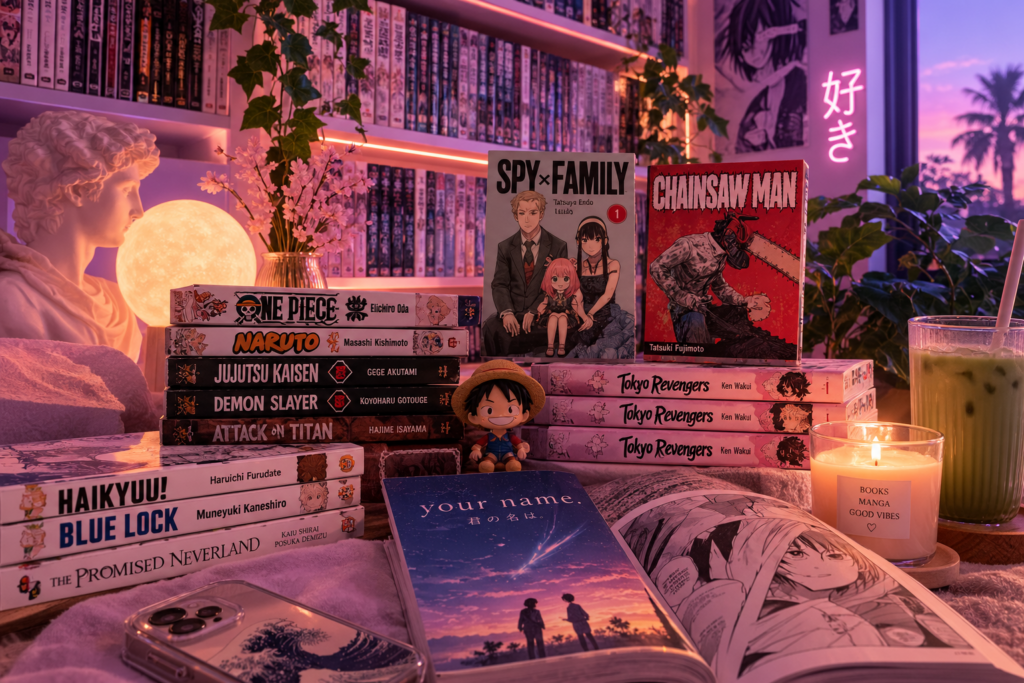
Not every popular reading experience comes in the form of a traditional novel. Manga and graphic novels combine illustrations, dialogue, and storytelling to create visually immersive experiences.
These formats cover almost every imaginable genre, including romance, horror, fantasy, action, and everyday life. Readers can discover everything from epic adventures to quiet, character-driven stories.
Series such as One Piece and Spy x Family demonstrate how diverse manga can be. Graphic novels also appeal to readers who appreciate visual storytelling and distinctive artistic styles.
For someone struggling to concentrate on long passages of prose, illustrated narratives can offer a refreshing alternative. They also challenge the misconception that meaningful reading must always involve pages filled entirely with text.
7. Literary and Contemporary Fiction: Stories That Reflect Real Life
Not every compelling novel needs magical creatures, shocking murders, or dramatic adventures. Literary and contemporary fiction often focus on relationships, personal identity, family dynamics, and everyday experiences.
These stories tend to explore characters in greater depth, allowing readers to understand their emotions and decisions. Their appeal often comes from recognizing something familiar in an unfamiliar person’s life.
Authors such as Sally Rooney and Fredrik Backman have attracted readers through emotionally complex, character-driven storytelling. Their novels demonstrate that ordinary experiences can become extraordinary through thoughtful writing.
For readers who enjoy meaningful conversations, realistic characters, and stories that stay with them, contemporary fiction is worth exploring.
8. Historical Fiction: Traveling Through Time
Historical fiction allows readers to experience different periods through imaginative storytelling. These novels often explore major historical events alongside the personal experiences of fictional or fictionalized characters.
War, political conflict, social change, and family histories are common themes. A carefully researched setting can make the past feel vivid and emotionally immediate.
Books such as The Nightingale by Kristin Hannah and All the Light We Cannot See by Anthony Doerr demonstrate how historical settings can support powerful human stories.
Although these novels may incorporate real events, they shouldn’t automatically be treated as factual accounts. Authors often invent dialogue, relationships, and situations to develop their narratives.
9. Self-Help and Personal Development: Reading for Growth
Many readers choose books not only for entertainment but also for practical guidance. Self-help and personal development titles explore habits, productivity, confidence, relationships, and emotional well-being.
Books such as Atomic Habits by James Clear and The Let Them Theory by Mel Robbins have attracted readers looking for ways to improve everyday life. Their popularity reflects an interest in accessible advice and personal reflection.
However, self-help trends change, and not every popular technique is supported by strong evidence. Readers benefit from approaching these books thoughtfully rather than assuming one method will work for everyone.
At its best, personal development reading can introduce useful ideas and encourage people to reconsider familiar habits.
10. True Crime and Narrative Nonfiction: When Reality Is the Story
Sometimes the most fascinating stories are the ones that actually happened. True crime examines criminal cases and investigations, while narrative nonfiction uses storytelling techniques to explore real events and experiences.
These books can combine suspense with history, psychology, science, or social issues. They appeal to readers who want engaging narratives without leaving the real world behind.
Titles such as In Cold Blood by Truman Capote and The Immortal Life of Henrietta Lacks by Rebecca Skloot demonstrate the different subjects nonfiction can explore.
Accuracy and sensitivity are particularly important when writing about real people. A compelling story should never come at the expense of responsible reporting or respect for those involved.
Why Are Certain Book Genres So Popular?
Book trends rarely develop in isolation. Social media recommendations, film adaptations, bestselling authors, and online reading communities all influence which stories attract attention.
Readers’ emotional needs matter too. Someone seeking comfort might choose romance, while another person looking for excitement may prefer horror or a psychological thriller.
Publishers also respond to reader interests through new releases, marketing campaigns, and special editions. However, a sudden bestseller doesn’t necessarily mean an entire genre is growing over the long term.
Which Book Genre Should You Try Next?
Choosing your next genre becomes easier when you think about the experience you want. Romance offers emotional connections, while thrillers and mysteries provide suspense and unexpected twists.
Fantasy and science fiction are ideal for exploring imaginative worlds. Historical fiction offers a different perspective on the past, while contemporary fiction focuses on recognizable human experiences.
If traditional novels haven’t been holding your attention, manga or graphic novels might be worth trying. And if you prefer learning something new, narrative nonfiction can combine information with compelling storytelling.
The best genre isn’t necessarily the most popular one. It’s the one that makes you excited to turn another page.
Final Thoughts: What Will Readers Love Beyond 2026?
The most popular book genres in 2026 show how varied modern reading has become. Romance and fantasy inspire passionate communities, thrillers deliver suspense, and horror and science fiction invite readers to explore unfamiliar possibilities.
Meanwhile, contemporary fiction, manga, and nonfiction demonstrate that great storytelling can take many forms. Reading trends will continue to evolve, and today’s most discussed genres may look different in a few years.
But the reason people love books remains remarkably consistent: we want to feel something, discover something, or experience a world beyond our own.
Which book genre have you been reading the most in 2026? Share your favorites in the comments!
Leave a Reply