
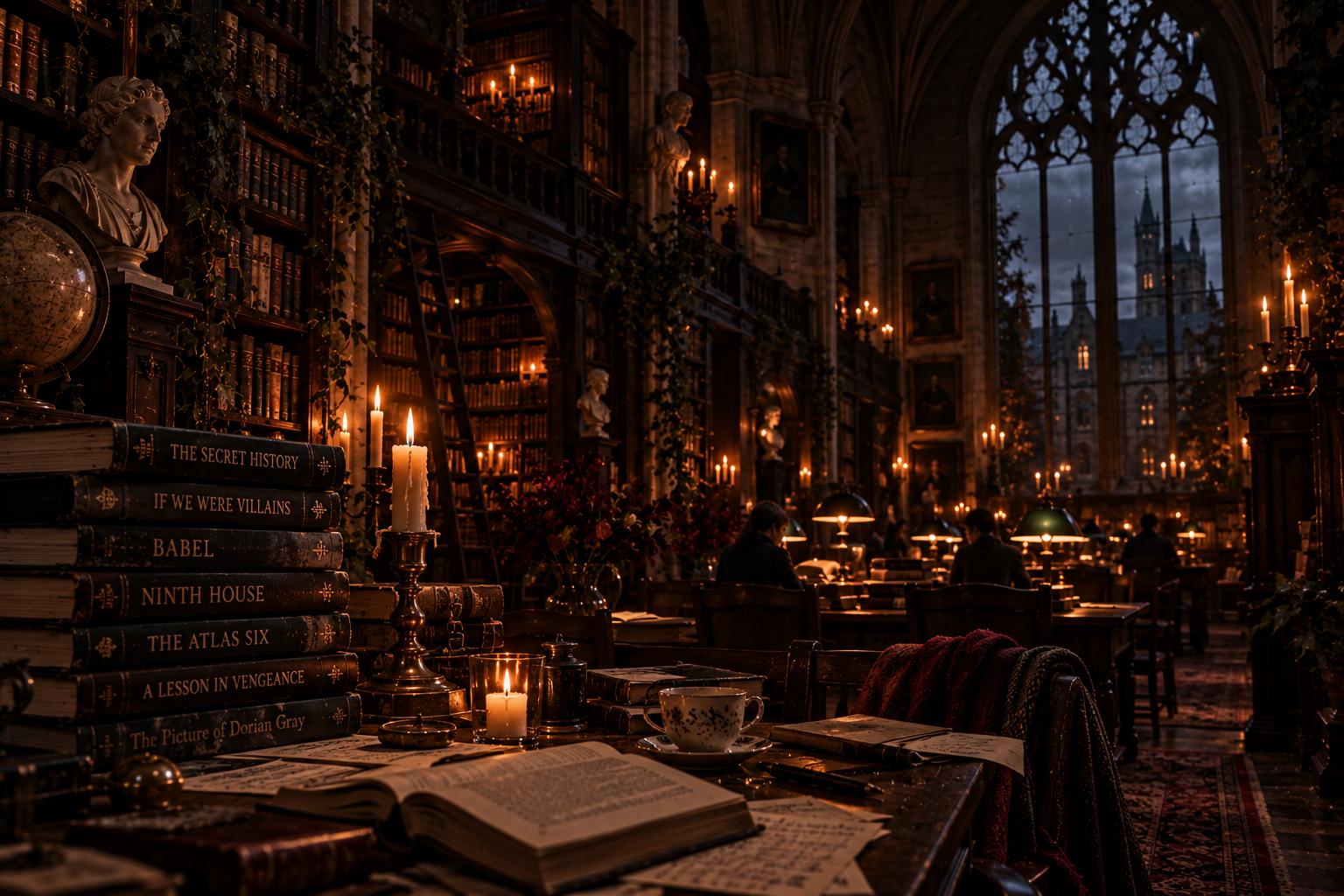
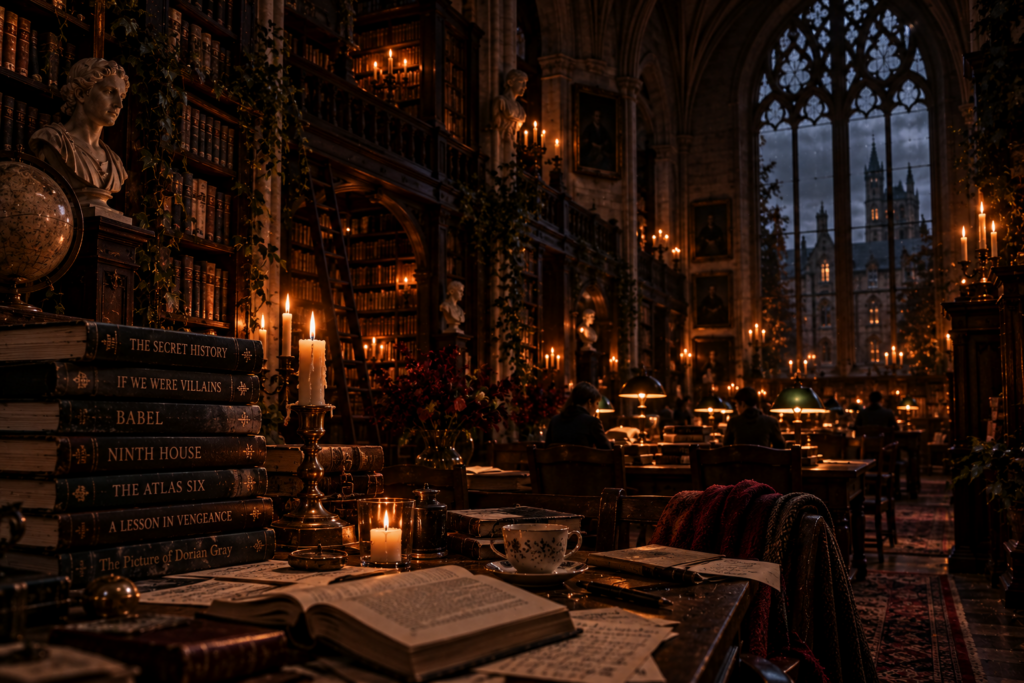
Imagine an ancient university with ivy-covered walls, candlelit libraries, endless shelves of forgotten books, and students discussing philosophy long after midnight. Now add a mysterious disappearance, dangerous secrets, and friendships that slowly become obsessive.
Welcome to the world of dark academia.
Dark academia books combine intellectual curiosity with atmospheric settings, complicated characters, and often a sense of approaching danger. The aesthetic has become particularly popular in online reading communities, where readers are drawn to its combination of literature, mystery, nostalgia, and gothic beauty.
But dark academia is more than an aesthetic filled with old books and beautiful libraries. Let’s explore what defines these stories, why readers love them, and which books are worth discovering.
What Is Dark Academia?
Dark academia is a literary aesthetic and storytelling style centered on education, intellectual ambition, classical literature, and the darker aspects of academic life. Its stories frequently take place at universities, boarding schools, libraries, or other environments devoted to learning.
Unlike a strictly defined genre such as romance or crime fiction, dark academia overlaps with several literary categories. A dark academia novel might be a psychological thriller, gothic mystery, fantasy, or literary drama.
What connects these stories is their atmosphere and recurring themes. Knowledge, obsession, ambition, secrecy, and moral ambiguity often play central roles.
Not every dark academia book includes murder or supernatural events. Sometimes the darkness comes from the characters themselves and the choices they make in pursuit of intellectual or personal success.
Where Did Dark Academia Come From?
The themes associated with dark academia existed long before the aesthetic became popular online. Gothic literature, campus novels, and stories about intellectual obsession have explored similar ideas for generations.
Donna Tartt’s The Secret History, published in 1992, is frequently regarded as a defining modern example. Its story of an elite group of classics students, complicated friendships, and a murder established many elements readers now associate with dark academia.
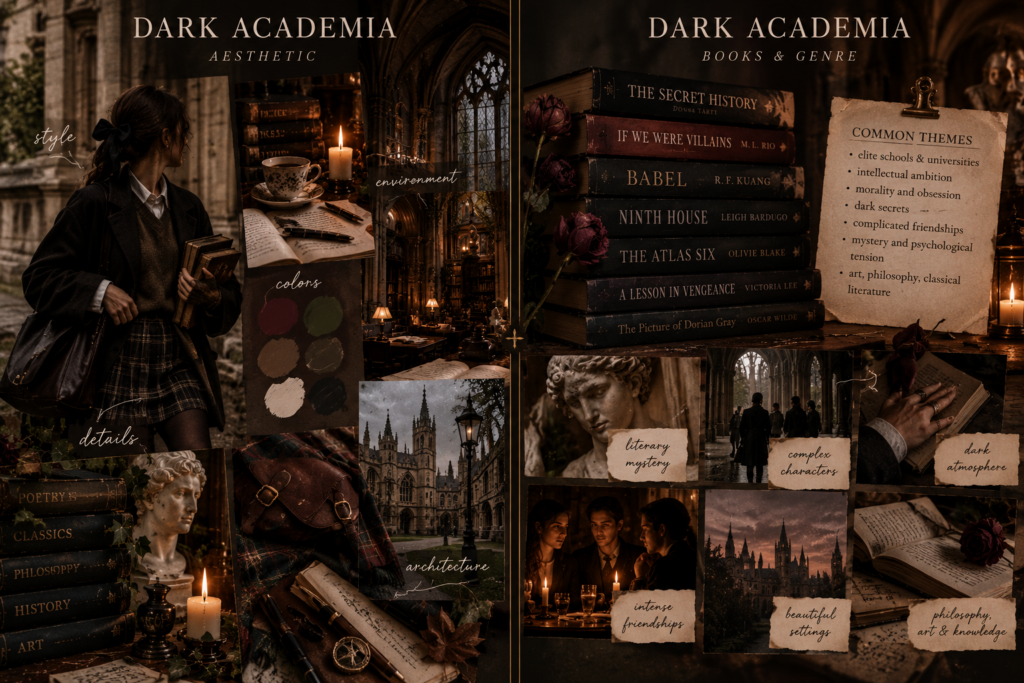
The aesthetic later gained visibility through platforms such as Tumblr, Pinterest, Instagram, and TikTok. Images of historic universities, handwritten notes, classical art, and old libraries helped create a recognizable visual identity.
However, dark academia’s appeal isn’t limited to beautiful surroundings. The most memorable stories use those environments to explore unsettling questions about ambition, belonging, and human behavior.
What Makes a Book Dark Academia?
Dark academia stories share several recognizable characteristics, although individual novels may emphasize different elements.
Atmospheric Academic Settings
Historic universities, prestigious schools, and secluded libraries are common locations. Rainy courtyards, dimly lit corridors, and old lecture halls help create an atmosphere of mystery and intellectual intensity.
These settings often feel almost like characters themselves. They can represent opportunity and beauty while also hiding secrets, traditions, and uncomfortable histories.
Obsession With Knowledge
Dark academia characters are frequently passionate about literature, philosophy, languages, art, or scientific discovery. Their desire to understand something can gradually become an obsession.
A character might sacrifice relationships, ethical boundaries, or personal happiness in pursuit of an idea. This tension between curiosity and obsession gives many dark academia stories their psychological depth.
Complicated Friendships and Rivalries
Close-knit groups of students appear frequently in dark academia fiction. Their relationships may involve admiration, competition, jealousy, secrecy, and a desperate desire to belong.
The pressure to succeed or gain acceptance can push characters toward increasingly questionable decisions. As a result, friendships that initially seem inspiring may become destructive.
Mystery and Moral Ambiguity
Many dark academia novels involve crimes, disappearances, hidden societies, or troubling discoveries. Yet the central mystery isn’t always about identifying a villain.
Sometimes the more interesting question is why intelligent people convince themselves that their actions are justified.
“Dark academia asks what happens when the pursuit of knowledge becomes more important than the consequences.”
7 Dark Academia Books Worth Reading
If you’re curious about dark academia books, these seven novels offer different interpretations of the aesthetic. Some are psychological mysteries, while others introduce fantasy, literary drama, or supernatural elements.

1. The Secret History — Donna Tartt
Often considered the quintessential dark academia novel, The Secret History follows a group of classics students at an elite Vermont college. Their fascination with ancient Greek culture develops into increasingly dangerous behavior.
The novel explores privilege, intellectual obsession, friendship, and the consequences of moral detachment. Its elegant writing and unsettling atmosphere make it an excellent starting point for understanding dark academia.
Best for: Readers who enjoy psychological tension, morally complicated characters, and literary mysteries.
2. If We Were Villains — M. L. Rio
Set at an elite arts conservatory, If We Were Villains follows a group of Shakespeare students whose relationships become entangled with rivalry and tragedy. When one student dies, the boundaries between theatrical performance and reality begin to blur.
The novel combines academic ambition with an emotionally intense mystery. Shakespeare’s plays influence both the characters’ relationships and the unfolding events.
Best for: Readers who love Shakespeare, dramatic friendships, and suspenseful campus stories.
3. Babel — R. F. Kuang
Babel takes readers to an alternate version of nineteenth-century Oxford, where translation and magical silver-working support the power of the British Empire. A gifted student gradually confronts the ethical consequences of the institution he belongs to.
The novel explores language, colonialism, privilege, and resistance. Its combination of academic atmosphere and speculative fiction offers a more politically focused interpretation of dark academia.
Best for: Readers interested in language, history, fantasy, and challenging moral questions.
4. Ninth House — Leigh Bardugo
At Yale University, secret societies practice dangerous forms of occult magic. Alex Stern, a young woman with an unusual ability, becomes involved in investigating their hidden activities.
Ninth House combines dark fantasy, mystery, and an elite academic setting. Beneath its supernatural elements, the novel explores power, inequality, and institutional corruption.
Best for: Readers who want dark academia with magic, secret societies, and supernatural suspense.
5. The Atlas Six — Olivie Blake
Six talented magicians are invited to compete for membership in a secret society that protects extraordinary knowledge. Only five will ultimately be accepted, creating an atmosphere of suspicion and rivalry.
The story focuses on ambition, intellectual competition, and complicated relationships between exceptionally gifted individuals. Its magical setting adds a speculative dimension to familiar dark academia themes.
Best for: Readers who enjoy morally gray characters, secret organizations, and intellectual rivalries.
6. A Lesson in Vengeance — Victoria Lee
At a secluded boarding school, a student returns after a traumatic loss and becomes fascinated by the institution’s history of mysterious deaths. Her growing friendship with a charismatic classmate leads her deeper into unsettling questions about the past.
The novel blends psychological suspense, gothic atmosphere, and questions about perception and belief. Its isolated setting creates a persistent feeling that something is wrong.
Best for: Readers looking for a gothic boarding-school mystery with an eerie atmosphere.
7. The Picture of Dorian Gray — Oscar Wilde
Although it predates the modern dark academia aesthetic, Oscar Wilde’s novel shares many of its central concerns. It follows a young man whose pursuit of beauty and pleasure leads to moral corruption.
The story explores art, philosophy, vanity, influence, and the consequences of separating intellectual ideals from ethical responsibility.
Best for: Readers interested in classic literature, philosophical questions, and gothic themes.
Why Do Readers Love Dark Academia?
Part of dark academia’s appeal is the romantic idea of learning for its own sake. Beautiful libraries, classical literature, and intellectual conversations make education feel mysterious and exciting.
For readers who enjoy books, history, and art, these environments can be especially attractive. They suggest a world where curiosity and knowledge occupy an important place in everyday life.
However, dark academia also exposes the uncomfortable side of that ideal. Its characters may be brilliant and ambitious, but they are often insecure, manipulative, privileged, or deeply flawed.
This contrast between beauty and darkness makes the stories compelling. Readers can admire the atmosphere while questioning the values and behavior of the people who inhabit it.
Dark Academia vs. Light Academia
Dark academia and light academia share an appreciation for learning, literature, art, and traditional academic environments. Their main difference lies in mood and emphasis.
Dark academia tends to explore obsession, secrecy, tragedy, and moral conflict. Its visual identity often includes shadowy libraries, dark clothing, gothic architecture, and muted colors.
Light academia generally emphasizes curiosity, friendship, creativity, and the more optimistic side of intellectual life. Sunlit libraries, peaceful gardens, and uplifting stories better capture its atmosphere.
These categories are flexible rather than strict literary classifications. A single book can contain elements of both.

Is Dark Academia a Genre or an Aesthetic?
Dark academia is best understood as both a literary trend and an aesthetic, rather than a completely separate genre. Its stories can belong to mystery, fantasy, thriller, or literary fiction while sharing recognizable themes and settings.
The aesthetic also exists beyond books. Fashion, architecture, photography, music, and interior design all contribute to its cultural identity.
This flexibility helps explain its popularity. Readers can enjoy dark academia through different kinds of stories without being limited to one traditional genre.
How to Get Into Dark Academia Books
If you’re new to dark academia, start with the type of story you already enjoy. Mystery readers might appreciate The Secret History or If We Were Villains, while fantasy fans may prefer Ninth House or Babel.
Pay attention to the atmosphere as much as the plot. Dark academia often relies on slow-building tension, complicated relationships, and ideas that develop gradually.
It’s also worth remembering that these books frequently explore disturbing subjects. Checking content warnings can help you choose stories that match your preferences.
You don’t need to love classical literature or attend a historic university to appreciate dark academia. Curiosity about human behavior, intellectual ambition, and mysterious settings is more than enough.
Final Thoughts: The Lasting Appeal of Dark Academia
Dark academia books invite readers into beautiful but unsettling worlds where knowledge, ambition, and obsession are closely connected. Their appeal comes from the contrast between romantic academic settings and the complicated people who inhabit them.
Whether you prefer psychological mysteries, gothic classics, or fantasy filled with secret societies, dark academia offers plenty of stories worth exploring.
And perhaps that’s what makes the aesthetic so fascinating: beneath the candlelit libraries and ancient books, these novels ask timeless questions about who we are and how far we’re willing to go for the things we desire.
Have you read any dark academia books? Which one would you recommend? Share your favorites in the comments!
Leave a Reply